
Orange, ZTE and Bitdefender partner to deliver secure smart home services
Published: June 16, 2026
How Orange Home Platform and prpl OS accelerate innovation in smart home services
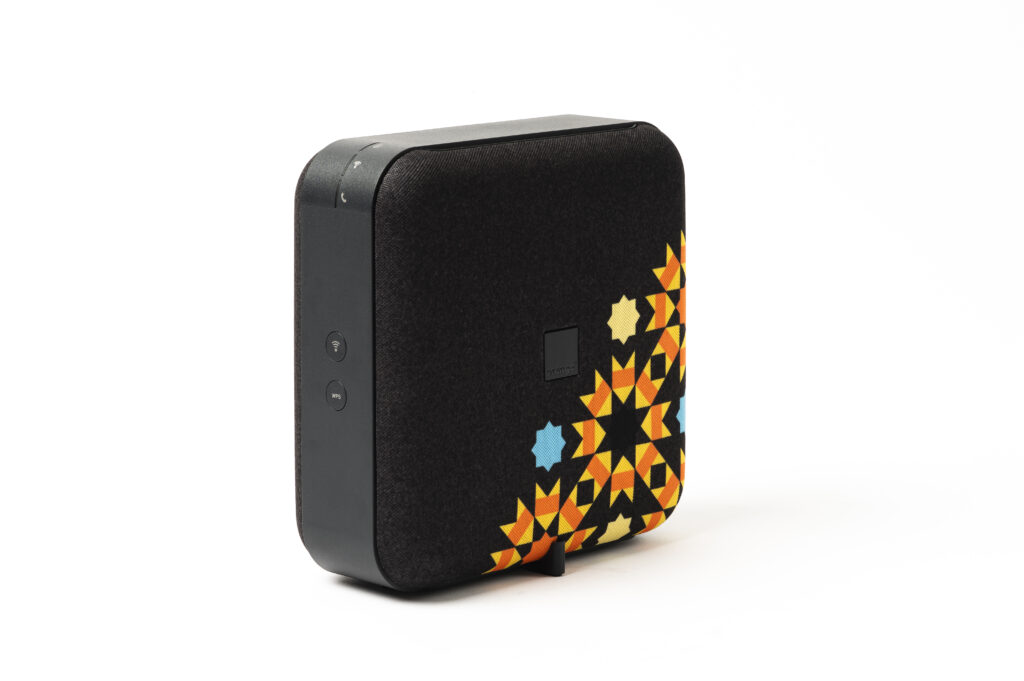
Orange Morocco, ZTE and Bitdefender are working together with Orange Innovation to bring new secure smart home services to the Livebox 7, based on Orange Home Platform and prpl OS. This collaboration shows how a shared, open and standardized software foundation can simplify service integration, accelerate deployment and unlock new capabilities for operators, device vendors and application partners. In this article, three experts share their perspectives on the benefits of prpl OS, lifecycle management and USP for the future of connected home services.
Discover insights from
- Saad Regragui, Marketing Manager and Livebox 7 Project Manager at Orange Morocco
- Ren Chenhui, Product Manager at ZTE
- Alexandru Trifan, Director of Software Engineering Connected Home at Bitdefender
Orange’s home platform strategy and prpl OS for home gateways
Orange is transforming its home gateway ecosystem through a platform-based approach designed to accelerate open innovation and bring new services to broadband customers. In this context, Orange Morocco has partnered with ZTE, Bitdefender and Orange Innovation to deliver parental control and VPN services on the new Orange Morocco Livebox 7.
This initiative illustrates why prpl OS was selected and highlights the benefits expected from upcoming capabilities such as application lifecycle management and the USP protocol, which help connect home devices with cloud platforms.
For more information about Orange Home Platform and prpl app development, readers can explore the dedicated Home Platform documentation.
What are the benefits of integrating prpl OS and using an open-source OS adopted by several carriers?
Alexandru Trifan:
“For Bitdefender, prpl represents a meaningful step forward in bringing security services closer to the home gateway. By providing an open, standardized platform, prpl allows us to focus on what we do best—building best-in-class security technology—rather than dealing with the integration complexity of fragmented, proprietary environments.The broader value of an open-source OS adopted by multiple carriers lies in the creation of a consistent, interoperable foundation for deploying services at scale. It reduces integration effort, accelerates time to market, and enables a more consistent service quality across operators. The Orange Morocco LiveProtection launch is a concrete example: it is a first for security services running natively on a prpl-based home gateway. It demonstrates that an open, carrier-backed platform can drive innovation while lowering barriers for technology partners.”
Ren Chenhui:
“Integrating prpl OS into our CPE solutions enables ZTE to deliver a standardized, modular and carrier-agnostic software platform that accelerates time to market and reduces integration complexity. As an open-source foundation, prpl OS fosters innovation through community collaboration and ensures interoperability across different hardware and service environments.With multiple carriers adopting prpl OS, we see a growing ecosystem driven by common requirements, shared tools and reduced fragmentation. This ultimately lowers total cost of ownership and enables faster deployment of differentiated services.”
Saad Regragui:
“Having prpl OS deployed across multiple gateways makes service integration much easier. Previously, we had to develop software for each gateway individually, which increased the number of technical validations required and therefore extended time to market.With a common operating system, we only need one integration, allowing our technical teams to focus on core validation activities. It also makes it easier to integrate the same software with gateways from other vendors and across other technologies, such as 5G.”
What do you expect from future application lifecycle management in addition to existing ACS features?
Saad Regragui:
“It is important to have lifecycle management in addition to ACS. ACS is able to manage gateways and their connectivity or service options, while lifecycle management is used to manage applications and additional software that customers can choose.This also helps separate hardware vendor activities from software developer activities, which accelerates time to market for new services. The most important point is that both rely on prpl OS standardization.”
Ren Chenhui:
“We expect carriers to use lifecycle management to streamline the deployment, update and monitoring of containerized applications on home gateways. A robust lifecycle management framework allows operators to manage application lifecycles remotely, securely and efficiently.This enables dynamic service customization, testing and rapid innovation, while maintaining system stability and a strong user experience.”
Alexandru Trifan:
“Robust lifecycle management support from carriers is essential to ensuring that security services remain current, reliable and operationally sound after deployment. Carrier-driven lifecycle management capabilities will help us meet partner expectations around continuity of service.They ensure that applications remain up to date, that updates can be delivered in a controlled and predictable way, and that the operational burden is reduced over time for both sides.”
What do you expect from carriers supporting the USP connectivity protocol?
Alexandru Trifan:
“USP provides carriers with a standardized way to manage and orchestrate services remotely, representing a major step forward compared with proprietary interfaces. For Bitdefender and other application developers, this industry convergence means faster deployment and significantly less one-off integration work.For carriers, it means better operational control and a more consistent foundation for delivering value-added services at scale. It is a clear benefit for both sides.”
Saad Regragui:
“USP fits into the overall architecture and helps marketing teams deploy services to customers more efficiently. Combined with lifecycle management, it enables each service to be installed smoothly on the CPE and helps ensure that it performs properly.”
Ren Chenhui:
“With USP support, we expect carriers to adopt a unified, secure and scalable protocol for device management and service control. This enables seamless integration between cloud-based service orchestration and edge devices.It also supports advanced use cases such as zero-touch provisioning, real-time service activation and cross-vendor interoperability, which are key enablers for future smart home and edge computing ecosystems.”
Conclusion
This collaboration between Orange Morocco, ZTE, Bitdefender and Orange Innovation shows how a shared software foundation can help accelerate smart home service innovation.
For developers and ecosystem partners, the value is clear: less fragmentation, faster integration and a more scalable path to deployment. For operators, it opens the way to more agile service delivery across gateways, vendors and future connected home use cases.
About the author

Yann Queffelec
Home Platform Tech Lead
Yann Queffelec has more than 20 years of experience developing large-scale software projects within Orange and currently leads Home Platform delivery.
Talk to sales
Do you want to reach directly for any additional details or follow-up?