At CASA26, the Network API conversation moved beyond technology
Published: September 29, 2026
At CASA26 in Amsterdam, the communications ecosystem came together to address a practical question: how can telecom networks create value in an increasingly AI-driven, platform-led market? Organised by the CPaaS Acceleration Alliance (CPaaSAA), the event brought together operators, CPaaS providers, cloud and AI players, analysts, startups and partners around intelligent engagement, trusted infrastructure, collaboration and Network APIs. (https://casa26.amsterdam/)
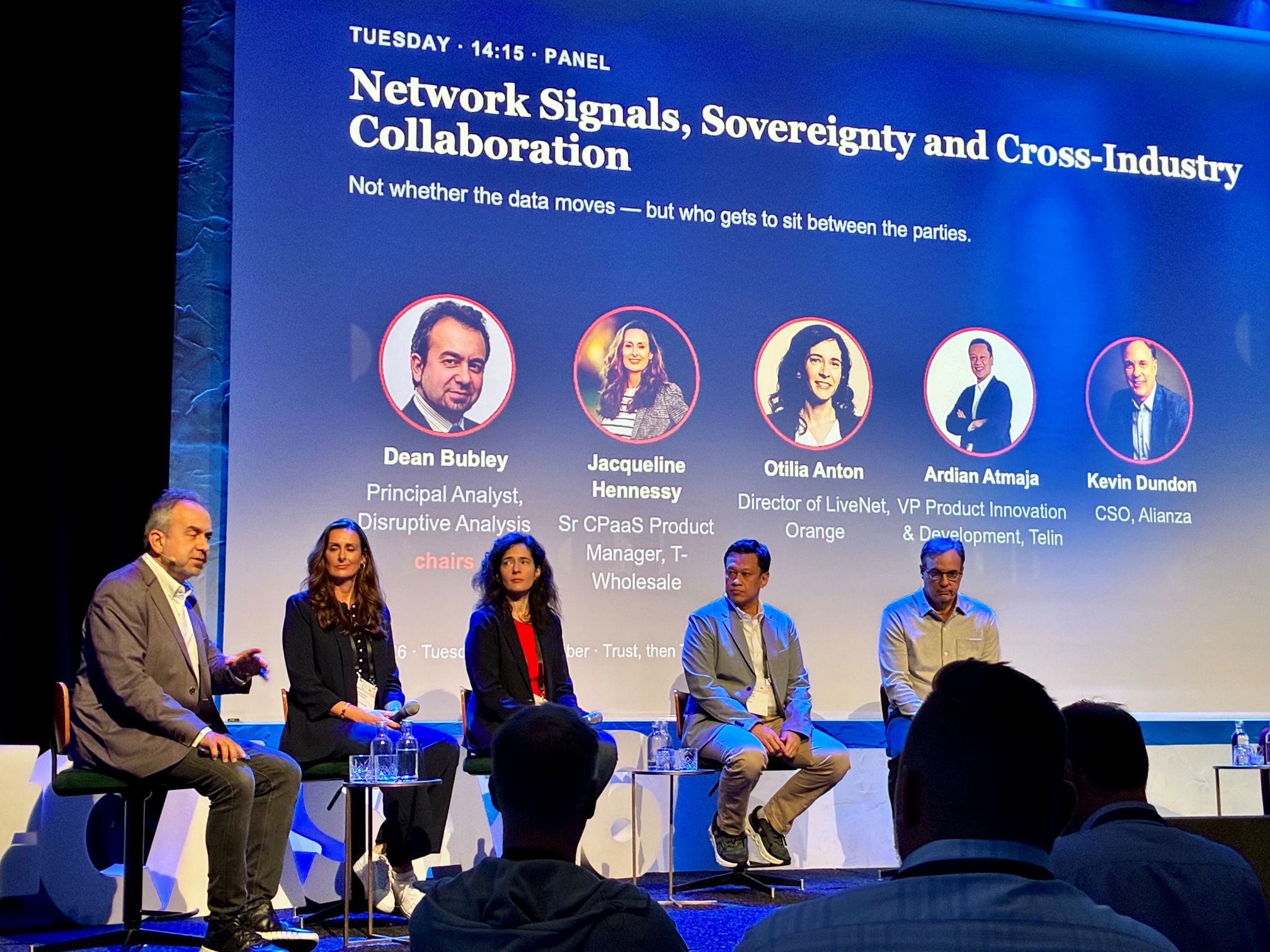
For LiveNet, the discussion was especially relevant. Otilia Anton, Director of Orange LiveNet, joined the roundtable “Network Signals, Sovereignty and Cross-Industry Collaboration,” chaired by Dean Bubley, Principal Analyst at Disruptive Analysis. Alongside leaders from T-Wholesale, Telin and Alianza, the panel explored the commercial and strategic conditions required for Network APIs to become scalable, trusted capabilities for enterprises.
The strategic issue: who owns the trusted layer?
The roundtable focused on a central tension in the market: data and intelligence will need to move across organisations, but the industry must determine who governs the exchange and who captures the value. The discussion addressed how operators can collaborate rather than consolidate, how data residency requirements influence architecture, and which network signals can be shared responsibly across industry boundaries.
This is not only a technical question. Network signals, such as verified identity, device status, location or quality-related information, can support business outcomes including fraud reduction, stronger customer authentication, better service assurance and more relevant digital journeys. However, their value depends on trust, interoperability and clear accountability. Enterprises will not adopt APIs simply because they are available; they need capabilities that fit into measurable operational workflows and meet their security, privacy and compliance requirements.
Collaboration is the route to scale
Otilia Anton’s participation reflected Orange LiveNet’s role in advancing Network API adoption across Orange’s footprint and the wider ecosystem. As the global business unit for Network APIs, Orange LiveNet works to make advanced network capabilities accessible to businesses and developers, while supporting the industry’s move towards common frameworks such as Open Gateway and CAMARA.
The panel brought together contrasting perspectives: an operator that has built its own CPaaS capability, an incumbent operator participating in shared API initiatives, an Asian carrier and a platform positioning itself as an orchestration layer between ecosystem participants. This mix made the debate concrete. The question was not whether operators should expose network capabilities, but under what commercial, technical and governance model they can do so without losing control of the trust assets that differentiate them.
From API exposure to market relevance
For operators, the next phase is to turn Network APIs from isolated technical products into repeatable business propositions. That requires common standards, developer-ready access, clear country and compliance guardrails, and partnerships that simplify adoption for enterprises operating across markets. It also requires discipline: not every network signal should be shared, and not every use case warrants a new integration.
The strongest opportunities will be those where the network provides a signal that is difficult to replicate through application-only data, particularly in identity, fraud prevention, device assurance and service quality. In these areas, operators can contribute more than connectivity: they can provide a trusted capability that helps enterprises make better decisions at the right point in a customer journey.
Conclusion
CASA26 underlined that the future of Network APIs will be shaped by collaboration as much as by technology. The industry must resolve how to combine sovereignty, interoperability and commercial relevance without creating unnecessary fragmentation or handing the trusted layer entirely to intermediaries.
For Orange LiveNet, participating in this conversation is part of a clear objective: help build an open, scalable and trusted Network APIs ecosystem where operators retain a meaningful role, developers can integrate with confidence, and enterprises can access network capabilities that deliver measurable business value.
Talk to sales
Do you want to reach directly for any additional details or follow-up?